A society reveals itself in how it treats the people who cannot argue for themselves. Not the articulate campaigner or the organised lobby, but the person with a severe mental illness who cannot explain what happened to them, the man with an intellectual disability found wandering a highway with no papers and no name. These are the people easiest to ignore, because ignoring them carries no cost. They will not write to a newspaper. They will not vote you out. And so, quietly, we have decided that their claim on our conscience is smaller than everyone else’s. It should be the other way around.
Start with how many we are talking about. The 2011 Census counted 2.68 crore persons with disabilities in India, about 2.21 percent of the population. That number is almost certainly far too low. The World Health Organization puts global disability prevalence closer to 16 percent, which would place India’s real figure in the range of 7 to 10 crore. In other words, the official count may be missing tens of millions of people. You cannot serve a population you refuse to properly see, and the undercount is itself a kind of neglect.
India’s laws, to their credit, read better than its streets do. The Rights of Persons with Disabilities Act, 2016 replaced an older 1995 law and widened the list of recognised disabilities from 7 to 21, finally including conditions earlier laws had ignored, among them cerebral palsy, dwarfism, muscular dystrophy, acid attack injuries, and intellectual and psychosocial disabilities. The Act reframed disability from a matter of charity to a matter of rights. It reserves 4 percent of government jobs and 5 percent of higher education seats, and it treats accessibility as an entitlement rather than a favour. India signed up to the UN Convention on the Rights of Persons with Disabilities back in 2007.
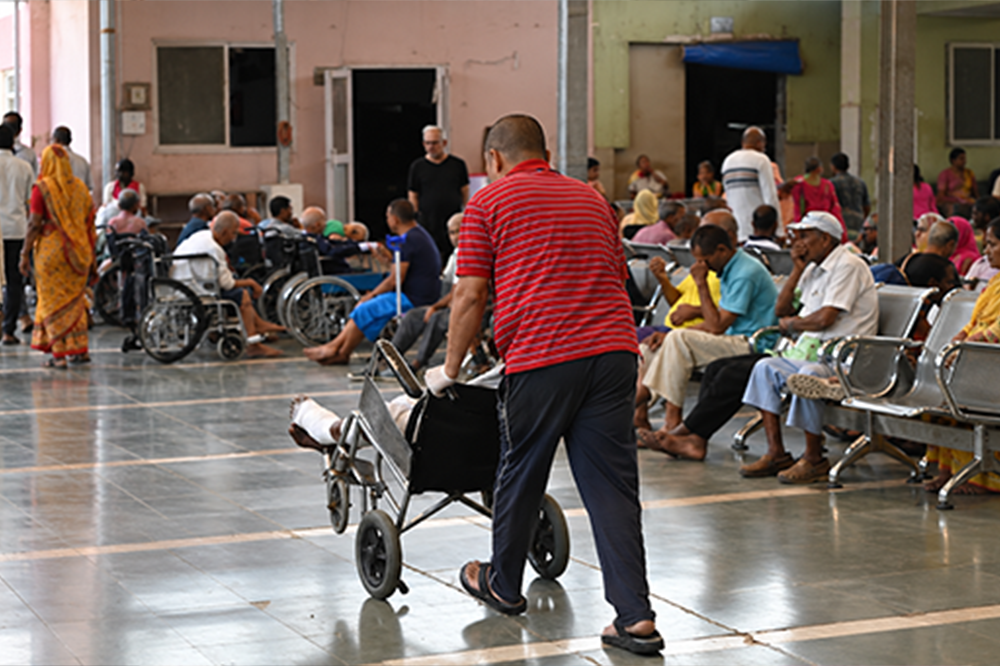
But here is the uncomfortable part. A right only reaches the person who can claim it. A disability certificate, a Unique Disability ID card, a government scheme, all of it assumes someone who knows the system exists and can navigate it, or who has a family to do the navigating for them. For a mentally disabled man with no family and no documents, picked up off a Gurugram road, that entire apparatus might as well not exist. The rights are real and they still miss him completely. This is the gap a good NGO for disabled persons in India has to live inside.
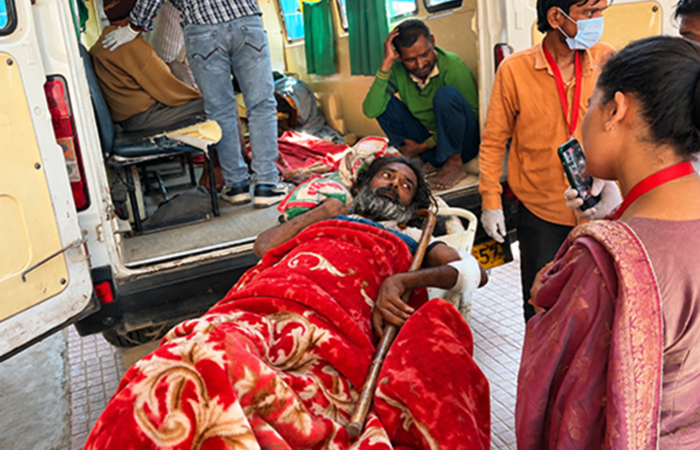
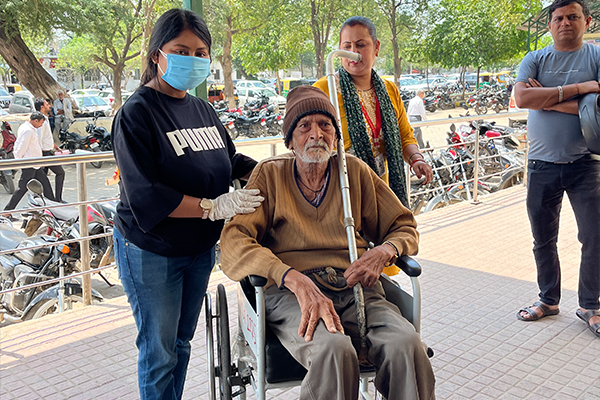
TESF lives inside it. The shelter, also called Gurukul, was founded in 2008 by Ravi Kalra and is run today by his son Jas Kalra. Of the roughly 1,200 people it houses, a large share live with mental illness or with intellectual and physical disabilities. These are precisely the cases other institutions pass along until there is nowhere left to pass them. The foundation takes them anyway, free of cost, funded by donations rather than any government grant. Residents arrive through the police, through courts, through officials, and through ordinary people who could not bring themselves to walk past. Many come in covered in wounds, unable to speak.
The real work there is not what most people picture when they think of disability care. We imagine ramps and wheelchairs, and access matters. But for a person with severe mental illness and no one in the world, the deeper need is to be treated as a person at all, rather than as a problem to be contained. That shows up in unglamorous ways: someone to bathe a resident who cannot bathe themselves, someone to sit with one who panics, someone who learns the moods of residents who have no words. The foundation has also cremated more than 11,000 unclaimed bodies since it began, many of them people who died disabled and alone, each given a dignified last rite. How you treat the people no one is watching over is the truest statement of what you believe about them.
The rest of us are not bystanders in this. If someone in your own family or street lives with a disability, the most useful thing you can do is unglamorous too: find out what they are actually entitled to and help them get it, because the system will not come looking. Insist that your workplace and your neighbourhood be genuinely usable by disabled people, as a normal expectation rather than a one-off gesture. And if you come across a disabled person in Gurugram who has been abandoned, you can hand them to an NGO for disabled persons in India that will not turn them away. Make the call that gets them off the road.
The barriers facing disabled Indians are many, and nearly all of them were built by people. That is the hard news and the hopeful news at once. What people built, people can take down, and until the day we do, places like this foundation will keep doing it the slow way, one rescued life at a time.