
Gurugram talks about winter the way the rest of north India does. Smog, fog, delayed flights, a few weeks when you finally use the heavy quilt. For most of the city, the cold is an inconvenience, something you complain about over chai. For the people sleeping under its flyovers, outside its hospitals and along its highways, it is something else entirely. It is the season that kills.
How cold becomes deadly
The nights in Delhi NCR can fall to a few degrees above freezing in December and January. During a cold wave, which the India Meteorological Department declares in the plains when minimum temperatures fall to around 4°C or below, or drop sharply below normal, they go lower still. Add dense fog, damp ground, wind off an open road and clothes that are already thin and wet, and a night outside becomes a real danger.
People often assume hypothermia only happens in snow. It does not. The body can lose heat faster than it makes it well above freezing, especially when someone is wet, hungry, exhausted or ill. It starts with shivering and confusion. Then the shivering stops, speech slurs and the person grows drowsy. By the time they stop asking for help, they may no longer be able to.
Who is most at risk
The people most likely to die of cold on a Gurugram pavement are the same people who were already the most vulnerable before the season turned.
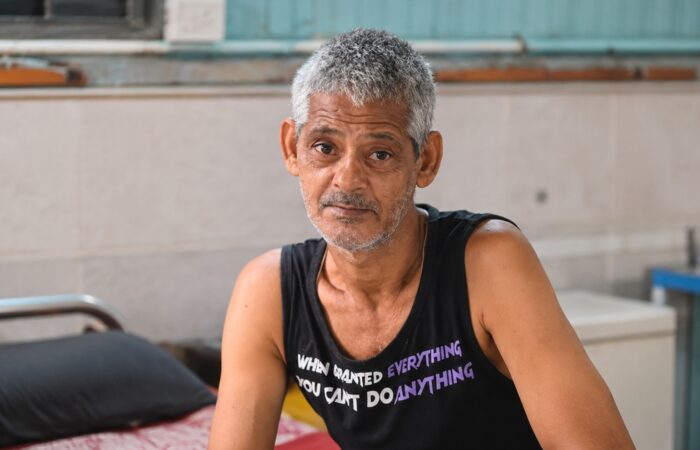
Elderly people are at the top of the list. Ageing bodies regulate temperature less well and often do not register how cold they are. An abandoned grandmother sleeping on a footpath may not shiver much, may not complain, and may simply fail to wake up.
People with mental illness are next. Someone with untreated schizophrenia or dementia may not dress for the weather, may give away a blanket, or may wander through the night instead of finding shelter. People with disabilities who cannot move to a warmer spot, people who are already malnourished or sick, and anyone who drinks to get through the night are all in danger too. Alcohol makes a person feel warmer while the body actually loses heat faster.
What winter looks like at a rescue shelter
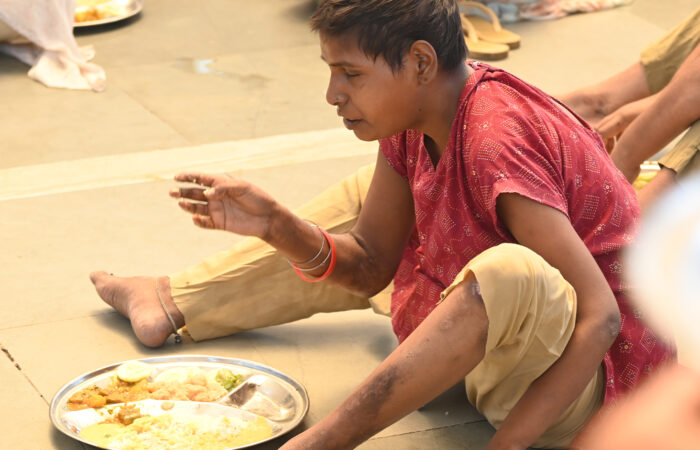
For The Earth Saviours Foundation, founded in Gurugram in 2008 by the late Ravi Kalra and led today by his son Jas Kalra, winter changes the rhythm of the work. Calls about people found on the roads come in at all hours, and many of the people rescued in these months arrive cold, weak and close to collapse.
Inside the shelters, the response is practical. At Bandhwari Sewa Dham, residents receive warm clothing and heaters through the winter, along with warm bedding in dormitories where they sleep indoors and off the cold ground. The medical centre runs around the clock, which matters most in the first hours after a rescue, when someone who is badly chilled needs to be warmed slowly, fed and watched. Across its two shelters, the foundation cares for more than 1,300 people, and every one of them has a roof, a bed and a hot meal on the nights when the city outside is at its coldest.
This is part of what separates the best NGO rescue centre in Gurgaon from a well-meaning blanket drive. Handing out blankets helps, and it saves lives. But a blanket on a pavement is still a pavement. The people at greatest risk need a way off the street altogether, and medical care when they arrive. You can read more about how the rescue centres work through the year.
What you can do on a cold night
If you see someone sleeping outside in the cold, especially if they are old, alone or seem unwell, do not assume they are fine because they are not asking for help. Check on them.
If they are unresponsive, confused, barely shivering or cannot be woken properly, treat it as an emergency. Call 112 or 108 for an ambulance. While you wait, move them out of the wind if it is safe, cover them with whatever you have and keep them off the bare ground with a mat, cardboard or a blanket underneath. If they are conscious and can swallow, a warm, non-alcoholic drink helps. Do not give alcohol, and do not rub their arms and legs hard.
If it is not an emergency but the person has nowhere to go, call The Earth Saviours Foundation. Share the exact location, a landmark and what you can see of their condition. A rescue in December can mean the difference between someone seeing January or not.
And if you want to help without stepping out at midnight, give what keeps people warm: blankets, sweaters, socks, caps and bedding for the shelters, or a donation towards heating, food and medical care. You can support the winter work here.
A season we can see coming
What makes winter deaths on the street so hard to accept is that nobody is surprised by them. The cold arrives every year, roughly on schedule. We know who is out there. We know which nights will be the worst. Every death from exposure in a city as wealthy as Gurugram is a death that could have been prevented by a phone call, a bed or a blanket at the right moment.
When people ask what the best NGO rescue centre in Gurgaon looks like, the answer is clearest in December. It is the one whose phone is answered at two in the morning in thick fog, whose team still goes out, and whose doors open for someone who would not have survived the night outside. If you are weighing where to give, our guide to choosing the best NGO rescue centre in Gurgaon sets out the questions worth asking.