
We like to measure a city by what it builds. Gurugram, by that measure, has done well for itself: the towers, the offices, the cars that cost more than most houses. But there is an older, harder measure of a place, and it has nothing to do with glass and steel. It is what the city does with the people who can no longer keep up. On that count, we are failing, and quietly.
Consider where the country is headed. The United Nations Population Fund, in its India Ageing Report 2023, projected that Indians aged 60 and above will cross 20 percent of the population by 2050, close to 347 million people. Around 2046, for the first time, older people will outnumber children under 15. More than 40 percent of India’s elderly already sit in the poorest quarter of the population, and roughly one in five older Indians now lives alone or with only a spouse. We are becoming an old country faster than we are becoming a kind one.
Most of those older people will be looked after by their families, and that is as it should be. But a growing number will not be, and it is worth being honest about what happens to them. They are not a statistic in a report. They are the woman left at a hospital gate because the treatment got expensive, the man whose son moved abroad and stopped answering the phone, the parent with dementia a family could not cope with and chose to forget. Abandonment of the old is not a rare tragedy in India. It is a routine one, and it reaches into comfortable homes, not only poor ones.
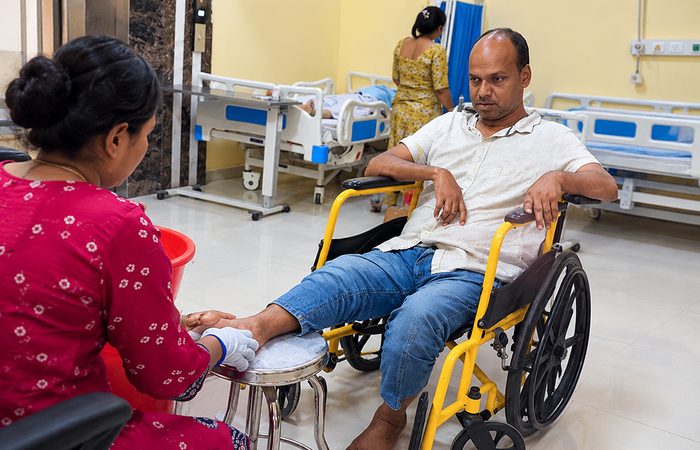
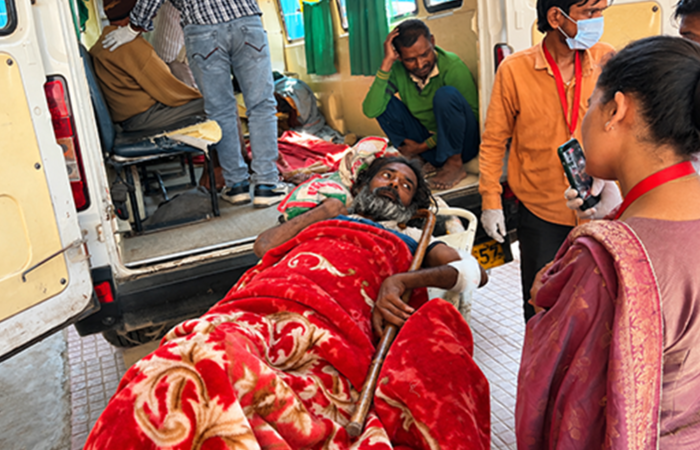
For people in that situation, there is often nowhere to go that asks for nothing in return, and this is exactly where an NGO for elderly care in India earns its place. The Earth Saviours Foundation has spent years filling that gap, one person at a time. The shelter in Gurugram, also known as Gurukul, was started in 2008 by Ravi Kalra, who walked away from a career as a martial artist to do it, and it is run today by his son, Jas Kalra. Around 1,200 people live there now, a large share of them elderly men and women who arrived with nothing. There is no fee. Nobody is screened for their ability to pay. People are brought in by the police, by courts, by officials, and by ordinary passers-by who found someone collapsed on a footpath. The foundation runs on donations, with no government money behind it.
One figure tells you what sort of place this is. Since it began, the foundation has cremated more than 11,000 unclaimed bodies, people who died with no family to claim them, each given a proper last rite by strangers. A society that leaves its elders to die unclaimed is a society that has lost the plot somewhere. An organisation that steps in to grant them dignity at the very end is doing work the rest of us would rather not look at.
It is fair to ask why this falls to a charity at all. India does have a law. The Maintenance and Welfare of Parents and Senior Citizens Act, 2007 makes it a legal duty for children to support parents who cannot support themselves, and allows a tribunal to order monthly maintenance. On paper, no abandoned parent should exist. In practice, a law only helps the person who can reach it, and an 80-year-old with dementia found alone on a road cannot file an application. What reaches that person is not a statute. It is a shelter that takes them in the same night.
None of this lets the rest of us off the hook. The point of an NGO for elderly care in India is not that it absorbs our collective neglect so we can carry on ignoring it. The point is that it shows the neglect for what it is, and it offers anyone who is troubled by it something concrete to do. You can keep an eye on an elderly neighbour who lives alone. You can refuse to look away from the old man outside the metro station. And if you find someone who has been abandoned and has nowhere to go, you can pick up the phone, because at Gurukul the gate still opens.
Old age should not be a punishment for the crime of outliving your usefulness to someone. For the people who come through this foundation’s doors, it no longer has to be. The question worth sitting with is why so many had to arrive there in the first place.