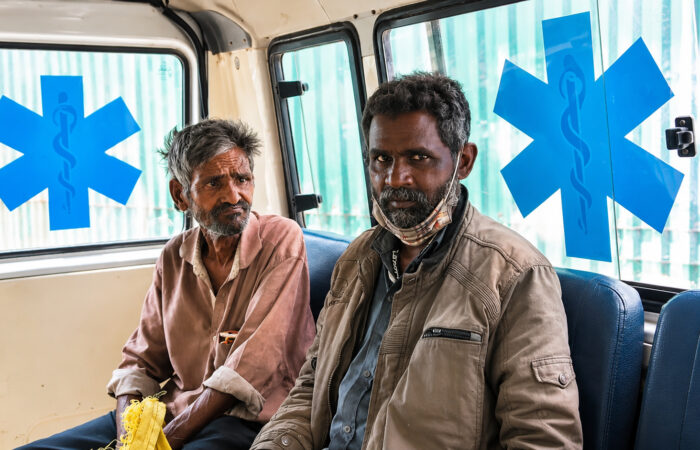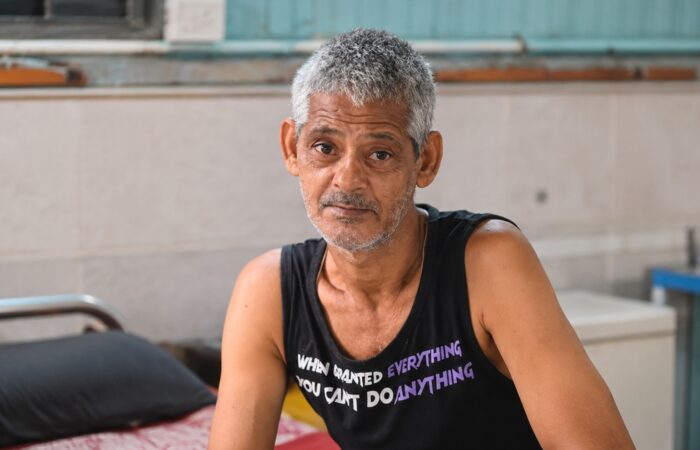

When we picture an abandoned old person, we tend to picture a man. A thin figure on a railway bench, a grandfather outside a temple. The numbers tell a different story. In India, the longer old age goes on, the more likely it is to belong to a woman, and the more likely that woman is to be widowed, poor and alone.
The United Nations Population Fund said as much in its India Ageing Report 2023. It projected that the number of Indians aged 80 and above will grow by about 279 percent between 2022 and 2050, and it described that oldest group as marked by a “predominance of widowed and highly dependent very old women.” Women live longer than men. In a country where most wives are younger than their husbands, that adds up to years, sometimes decades, of widowhood.
Those years are rarely comfortable. The same report drew on the Longitudinal Ageing Study in India, which found that 51 percent of men over 60 were still working, against 22 percent of women. Many of today’s elderly women never held a salaried job, never built a pension and never owned the house they lived in. Their security was the marriage and then the son. When the husband dies and the son moves away, or turns away, there is very little left underneath them.
How a woman ends up with nowhere to go
The paths are depressingly ordinary. A widow’s name was never on the property papers, and after a family dispute she is no longer welcome in the house she ran for forty years. A daughter-in-law and son decide they cannot manage her dementia. A woman who worked as a domestic help her whole life simply ages out of work, with no savings and no family in the city. Some are brought to a hospital and never collected. Some are found wandering because they no longer remember the way home.
The residents of The Earth Saviours Foundation’s shelters in Gurugram include many women like this. The foundation was started in 2008 by the late Ravi Kalra and is led today by his son, Jas Kalra. Across its two shelters, Bandhwari Sewa Dham and Mandawar Sewa Dham, it cares for more than 1,300 people aged 18 to 100, free of cost. Women who arrive there are often referred by the police, by government hospitals, by courts or by state welfare officials who had nowhere else to send them.
What care looks like once she arrives
For a woman who has spent months or years being treated as a burden, the first days in a shelter are less about medicine than about being treated as a person again. There is a bath, clean clothes, a bed of her own and a meal she did not have to ask for. Then come the checkups. At Bandhwari Sewa Dham, the medical centre runs around the clock, with routine checkups, medicines, emergency care and physiotherapy, and a transport team that takes residents to hospital when they need more.
What surprises most visitors is how much of the work is social. Festivals are celebrated. Women sit together in the afternoons, argue, laugh and look after each other. Loneliness in old age is not just sadness. It is linked to worse heart health and faster cognitive decline, which means company is a form of care in its own right. A good NGO for elderly care in India treats it that way.
Why women need to be at the centre of elder care
Most planning for old age in India still assumes a male earner with a pension and a wife to look after him. That model fits fewer people every year. If the UNFPA’s projections hold, the typical very old Indian of 2050 will be a woman who has outlived her husband, has little or no income of her own and depends on others for daily tasks. Any serious response to ageing has to start with her.
That means pensions that reach women who never had formal jobs. It means property rights for widows that hold up in practice, not only in law. It means care homes and day centres that are affordable, or free, for those who have nothing. And until those things are in place, it means organisations willing to take her in when everything else has failed. If you want to understand how such work is done, our earlier piece on what it means to be an NGO for elderly care in India goes into the wider picture.
What you can do
If there is an elderly widow in your building or your lane who lives alone, check on her. Ask whether she is getting the widow pension she may be entitled to, because many eligible women are not. If you find an older woman who has been abandoned, call The Earth Saviours Foundation on 9871675485. And if you would like to help keep these women fed, treated and safe, you can support the work here.
Old age should not depend on whether your husband outlived you or your son stayed close. For the women at TESF, it no longer does. As an NGO for elderly care in India, that is the whole of what the foundation is trying to do: make sure that the last chapter of a woman’s life is not spent alone on a pavement.