
When people talk about disability in India, the picture is usually physical. A wheelchair, a white cane, a missing limb. Those disabilities are real and so are the barriers that come with them. But there is another kind that rarely makes it into the posters, even though Indian law has recognised it for years: mental illness. And it is this disability, more than almost any other, that ends with people alone on the street.
A recognised disability that is still treated as a private shame
The Rights of Persons with Disabilities Act, 2016 widened India’s list of recognised disabilities from 7 to 21, and mental illness is on it, alongside intellectual disability and other conditions that earlier laws ignored. In principle, a person with schizophrenia or severe bipolar disorder has the same claim to support, protection and dignity as anyone else with a disability.
In practice, the gap is enormous. The National Mental Health Survey of 2015 and 2016 estimated that around one in ten adults in India was living with a mental disorder, and that the treatment gap for these conditions ran between roughly 70 and 92 percent. In other words, most people who need care never get it. For a family with little money and less information, a son who starts hearing voices or a mother who stops recognising her children can feel like a catastrophe with no exit. Some families cope. Some do not. Too often, the person drifts out of the house and does not come back.
What happens to them on the road
A person with untreated psychosis on a Gurugram street is about as vulnerable as a human being can be. They may not eat for days. They may walk barefoot until their feet split. They are easy targets for theft and abuse, and they cannot explain who they are to anyone who tries to help. Because they may seem frightening or unpredictable, passers-by keep their distance. Weeks become months.
The law does anticipate this. The Mental Healthcare Act, 2017 places a duty on the police to take into protection a person with mental illness who is found wandering and unable to care for themselves, and to bring them to a public health facility for assessment. It is a good provision. But assessment is not a home, and a hospital bed is not permanent. After treatment, the question remains: where does this person go if there is no family to return to?
Where The Earth Saviours Foundation comes in
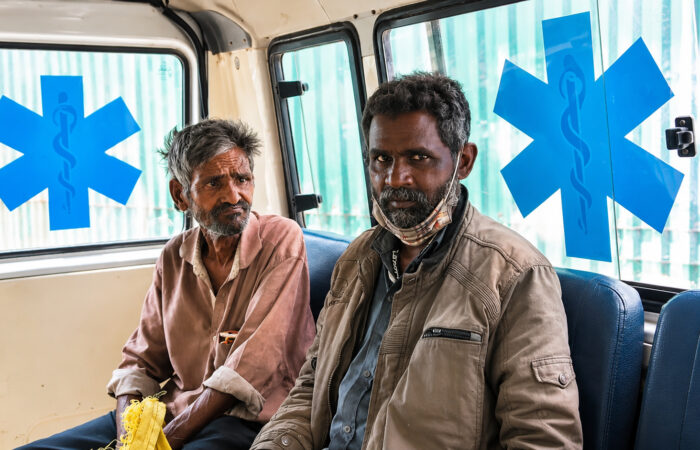
That question is a large part of why The Earth Saviours Foundation exists. Founded in Gurugram in 2008 by the late Ravi Kalra and led today by his son Jas Kalra, it shelters more than 1,300 people across its two homes. Many of them live with mental illness, including schizophrenia, or with intellectual and physical disabilities. Many were referred by the police, by government hospitals or by courts, precisely because no other institution would take them long term.
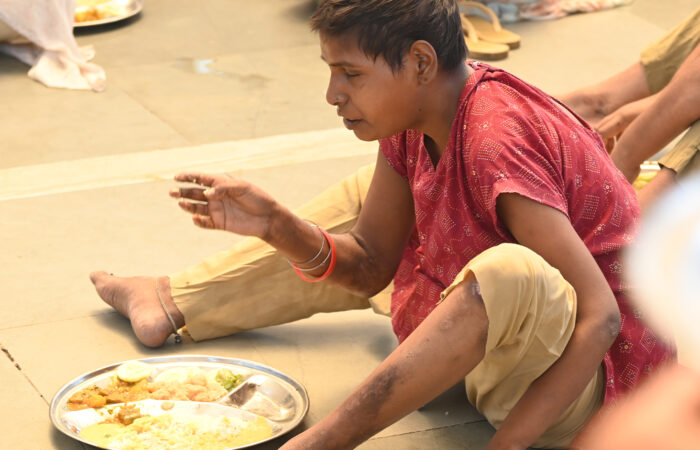
Here, the care is free and it does not end. Residents get a bed, regular meals, on-site medical and psychiatric care, and medication given on time, which for many is the first steady treatment of their lives. With that, some improve enough to remember a village name, a relative, a phone number. The foundation says it has reunited more than 10,000 people with their families over the years, and for some residents with mental illness, that reunion only became possible once they were well enough to help find their way home. Others stay, and the shelter becomes their community. You can read more about this side of the work in our piece on caring for the disabled persons in Gurugram who have no one.
Why this matters for anyone who cares about disability rights
It is tempting to treat homeless mentally ill people as a separate problem, something for the police or for psychiatrists. But they are among the most excluded disabled people in the country. They cannot claim a disability certificate, enrol in a scheme or file a complaint when they are turned away. Any honest conversation about what an NGO for disabled persons in India should do has to include them, because they are the people every other part of the system has already passed along.
There is also a lesson here about what dignity means in practice. For a resident with severe mental illness, dignity is someone who bathes them without disgust, gives their medicine on time and sits with them when they panic. It is a staff member who learns their moods and their name. None of this is dramatic, and almost none of it makes the news. It is still the core of the work.
How you can help
If someone in your family is showing signs of serious mental illness, seek help early. Government district hospitals have psychiatric services, and early treatment can change the whole course of a life. If you see a person on the street who appears mentally unwell and unable to care for themselves, call the police on 112, or call The Earth Saviours Foundation on 9871675485. And if you want to give your time rather than money, the foundation welcomes volunteers.
Mental illness is a disability. The people living with it on our roads are disabled citizens with rights, not nuisances to be moved along. Treating them that way is the minimum we owe them, and it is the daily work of any NGO for disabled persons in India worth the name.